ARTIST BIOGRAPHY
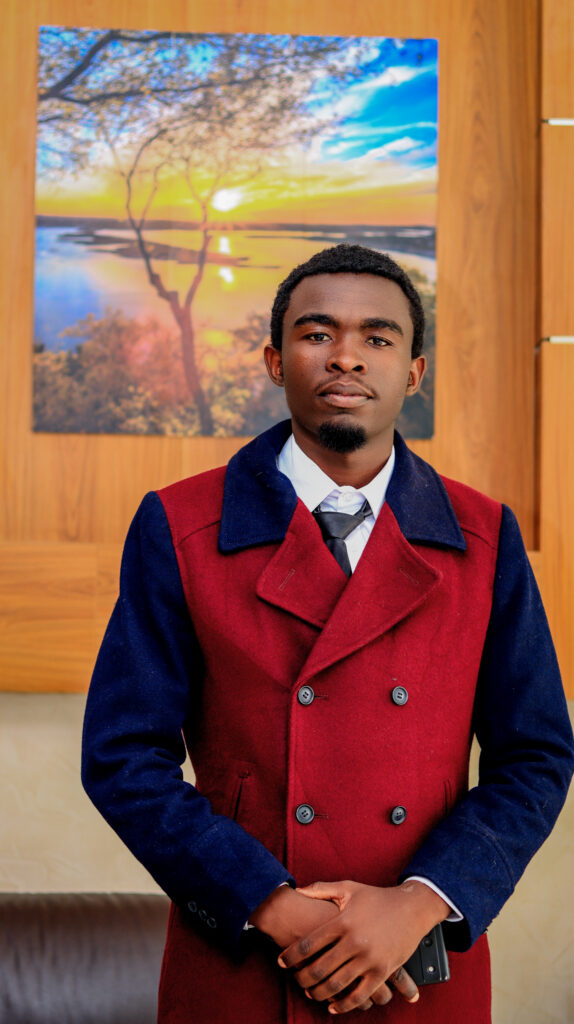
Exauce Bigue Koviko, known artistically as KOVICOS, is a multidisciplinary artist whose practice moves between symbolic abstract expressionism, sculpture, poetry, music, and social engagement. Born in 2005 in Bukavu, South Kivu, Democratic Republic of Congo, his work emerges from lived experience shaped by war, displacement, and the long psychological aftermath of survival.
As a child, KOVICOS sculpted figures from mud and clay, recreating characters from films and inventing forms driven by curiosity rather than instruction. This instinctive relationship with material questioning origins, structure, and transformation has remained central to his practice. Forced displacement due to conflict in eastern Congo led his family into exile in Uganda, where he grew up in Nakivale Refugee Settlement as a refugee. The loss of home, language, and continuity became defining forces in both his identity and artistic vision.
Within conditions of scarcity, KOVICOS developed an artistic language rooted in resilience and invention. With limited access to conventional tools, he turned to paper and found materials for sculpture, transforming fragility into form. During this period, he formulated Dotism, a philosophical and visual system grounded in the belief that life unfolds in interconnected cycles whereby “from something comes everything, and from everything comes something.” Dots, marks, and symbols become carriers of memory, presence, and absence.
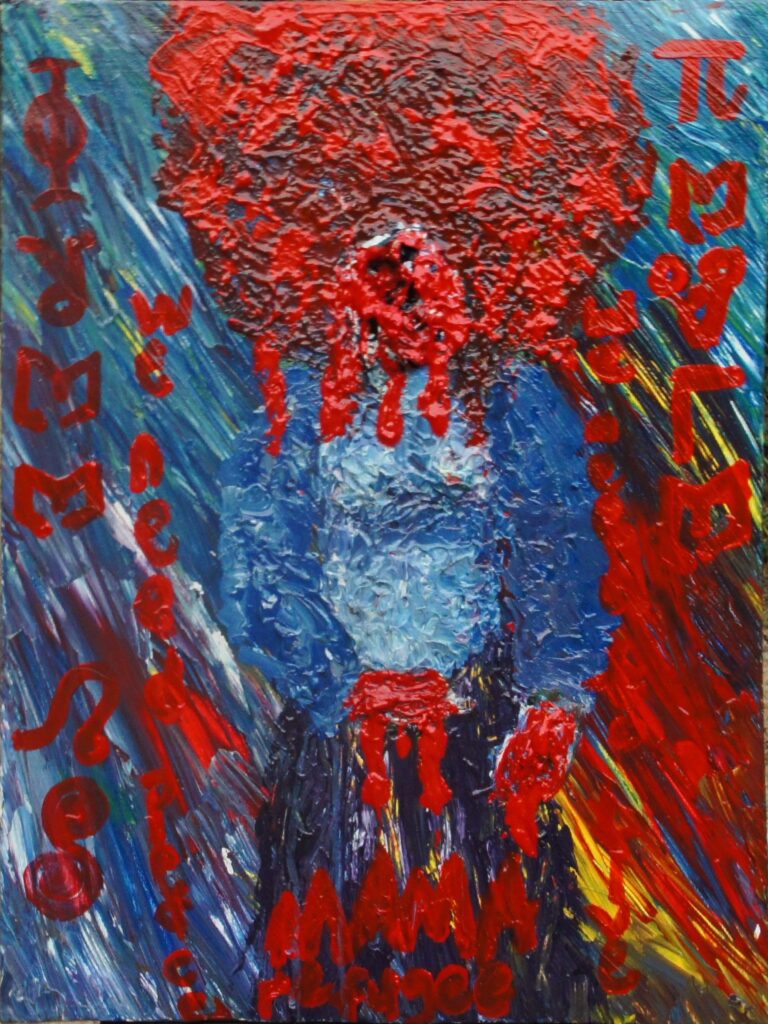
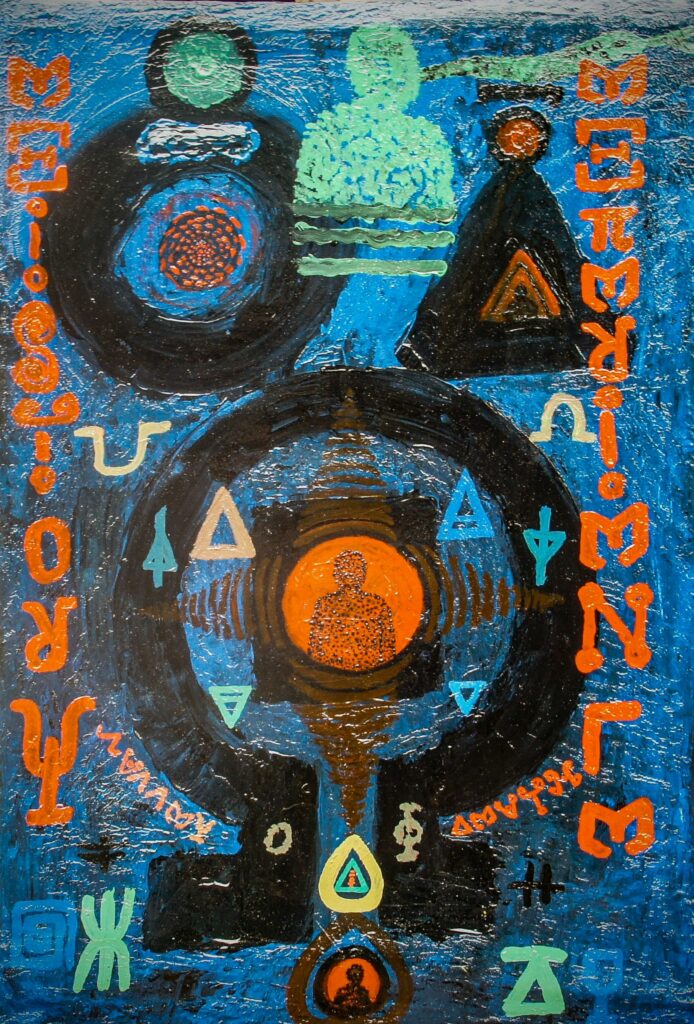
Extending this language, KOVICOS created his own symbolic alphabet and numerical systems, VICOBETS and VICO NUMERALS which function as encoded narratives within his paintings and sculptures. These symbols are not decorative; they act as vessels for memory, trauma, heritage, and personal cosmology, allowing him to speak beyond conventional language.
In 2023, KOVICOS began his ongoing body of work The World of Circles, a series of paintings and sculptures responding to questions of identity, intergenerational trauma, and freedom. The collection reflects on how histories of violence, oppression, and displacement repeat across generations, while also asserting the human capacity for resistance, healing, and transformation. Freedom which he believes to be emotional, psychological, spiritual, and political stands at the core of this work, not as an abstract ideal, but as a lived necessity.
Alongside visual art, KOVICOS creates literary through poetry and authorship, extending his practice into sound and language as additional spaces of testimony. His multidisciplinary approach positions art as a site of encounter where personal history intersects with collective experience, inviting viewers into introspection, empathy, and dialogue.
KOVICOS has exhibited with War Child Canada and UNICEF, at Ujuzi Co-creation Hub, and at Makerere Art Gallery. His work continues to evolve as a living archive of displacement, diaspora memory, post war experiences, resilience and the pursuit of freedom.
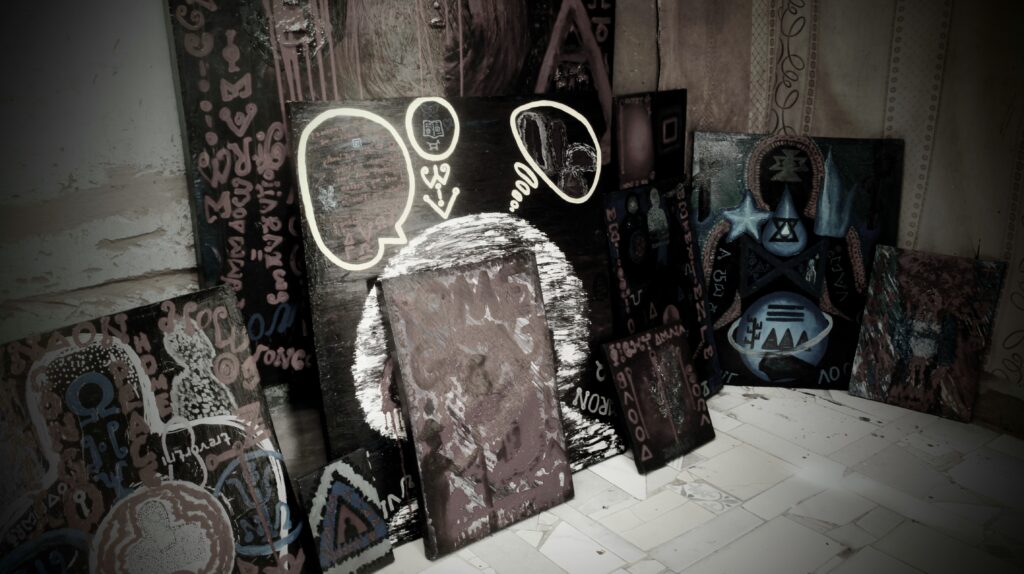
ARTIST STATEMENT
My practice is rooted in the translation of complex human experience into visible testaments that spark emotion before interpretation. Through symbols, color, texture, and mixed materials, I engage lived realities of displacement, diaspora memory, post-war experience, identity, and the persistent search for freedom. Rather than illustrating events, I focus on the emotional and psychological residues they leave behind.
Shaped by lived experience, my work reflects an ongoing inquiry into belonging and selfhood beyond a single narrative or geography. Displacement, in my practice, is not only a physical condition but a psychological and generational one that’s carried through memory, inherited trauma, and cultural dislocation. These layers inform a visual language that holds shared human questions: How do we endure? What sustains us in fractured circumstances? Who are we when history interrupts continuity? What does freedom mean when choice is constrained, and how do we continue to imagine it?
I approach each work with precision and care, guided equally by intention and intuition whereby balance, presence, and longevity are central to my process. Materials are chosen for their capacity to carry weight that’s both emotional, symbolic, and temporal allowing each piece to exist beyond immediacy or trends. The work is meant to live with people, to deepen over time rather than rely on trends or surface engagement.
At its core, my practice seeks connection: between personal experience and collective memory, between the visible and the unseen, and between the viewer and their own interior landscape. I aim to create work that is understood not because it is simplified, but because it is sincere while it holds memory, carries value, and earns its place within contemporary discourse and lasting collections.